

Buying a home? Protect your budget by avoiding these common home-buying mistakes!
Buying a home is one of the biggest financial decisions you'll ever make. But it's easy to make costly mistakes if you're not fully prepared from the start. From taking on new debt to overlooking ongoing homeownership costs—the smallest financial decisions can have a big impact on your ability to buy and afford a home!
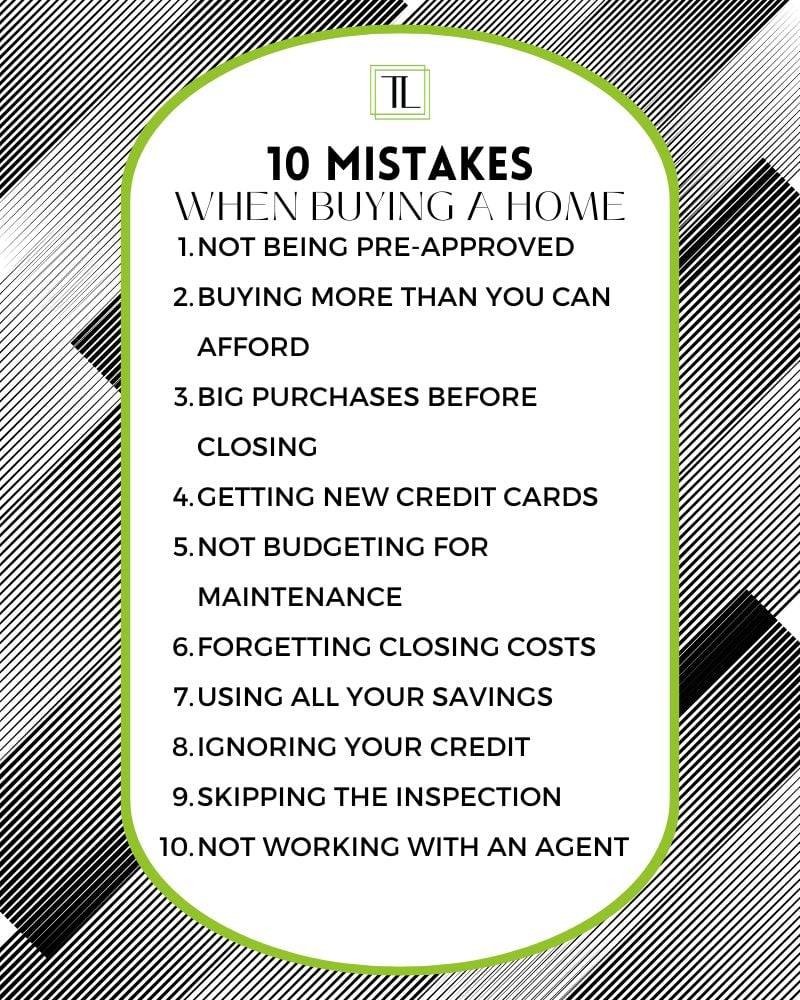
And when it comes to making smart decisions and long-term success, these are the 10 most common financial mistakes to avoid when buying a home.
1. Not Getting Pre-Approved
One of the biggest mistakes buyers make is starting their home search before knowing what they can realistically afford. Pre-approval is essentially “pre-applying” for a home loan; a lender will verify you are able to buy a home and at what price. The last thing you want is to fall in love with a home that's outside your budget! Plus, it lets sellers know you’re serious about your offer.
Getting pre-approved by a lender gives you a much clearer picture of your buying power & helps you:
Understand your budget
Estimate your monthly payment
Strengthen your offer in a competitive market
Shorten the time it takes to closing on a home
Also, there are some ways you can save money on a home before you even find one to buy; steps which should be taken at the pre-approval stage.
2. Buying a Bigger House than You Can Afford
Just because you're approved for a certain loan amount doesn't mean you should spend that amount. After all, the purchase price is just one part of owning a home… not all of it. Choosing a home that fits comfortably within your budget can help reduce your financial stress over time and give you more flexibility for the future.
You want to think beyond your monthly mortgage payment and consider other expenses like:
Property taxes
Homeowners insurance
HOA dues
Utilities
Routine maintenance
Future repairs
3. Financing Large Purchases Before Closing
It can be tempting to start shopping for new furniture or appliances before you've officially bought the house… DO NOT DO THIS! A lender will look at everything right up until the closing day, and big spending could affect your mortgage approval. Whenever possible, wait until after closing before making major purchases.
Large purchases made before closing may:
Increase your debt-to-income ratio
Lower your credit score
Trigger additional lender reviews
Delay or even jeopardize your loan approval
4. Opening New Credit Cards
Similarly, opening a new line of credit while looking for a home can greatly impact your mortgage application. Until you've officially closed on a home, it's usually best to avoid applying for any new lines of credit.
Lenders typically review your credit more than once during the loan process, and new accounts can:
Lower your average credit age
Increase available debt
Affect your credit score
Change your loan eligibility
5. Not Budgeting for Home Maintenance
Unfortunately, owning a home means you're responsible for the repairs and maintenance. While every home is different, many financial experts recommend setting aside approximately 1%–3% of your home's value each year for home maintenance and unexpected repairs.
You can prevent financial strain by planning ahead for things like:
HVAC servicing
Roof repairs
Plumbing issues
Landscaping
Appliance replacement
Exterior maintenance
6. Forgetting About Closing Costs
Many homebuyers focus solely on saving for a down payment and completely forget about closing costs! Closing costs can typically range from 3-6% of the purchase price (depending on your loan and location), so it's important to include them in your overall home-buying budget!
Closing costs include things like:
Loan fees
Title insurance
Appraisal fees
Home inspection
Escrow fees
Recording fees
Prepaid taxes and insurance
7. Draining Your Savings Account
Using every dollar you have for a down payment may leave you financially vulnerable after closing, and is not advised. Maintaining your emergency funds can provide valuable peace of mind after moving into your new home. After all, you never know when disaster will strike.
8. Ignoring Your Credit Score
Before buying a home, review your credit report for errors and avoid missing payments or increasing your debt. Even a modest improvement in your credit score could help you qualify for a better mortgage rate!
Your credit score plays a major role in determining:
Loan eligibility
Interest rate
Monthly mortgage payment
9. Skipping the Home Inspection
In an effort to make their offer more competitive, some buyers consider waiving a home inspection. However, this isn’t usually a good idea. A home inspection provides valuable information on the state of the home that can help you make an informed decision about your purchase. While every situation is unique, understanding a property's condition before closing is essential.
Home inspections help identify potential issues, such as:
Roof damage
Plumbing problems
Electrical concerns
Foundation issues
HVAC repairs
10. Not Working with a Real Estate Agent
Buying a home involves so much more than touring properties. Having someone to guide you throughout the process can help you avoid costly mistakes and make your home-buying experience smoother from start to finish.
An experienced real estate agent can help you:
Understand the local market
Find homes that fit your goals
Negotiate effectively
Coordinate inspections & deadlines
Explain contracts & paperwork
Connect you with trusted lenders & service providers
Buying a home should be exciting—not overwhelming! By avoiding these common financial mistakes, you'll be better prepared to navigate the home-buying process with confidence and make decisions that support your long-term financial goals. Whether you're just beginning to explore your options or you're ready to start house hunting, taking the time to plan ahead now can make all the difference later!
If you're thinking about buying a home, our team is here to guide you every step of the way. Contact us today to get started!

Alexis Feezel is a results-oriented Marketing Coordinator responsible for developing, implementing, and overseeing all promotional strategies and activities to effectively market clients & listings and maximize sales.