
How do you know what type of real estate market we’re in, and what does it actually mean?
You've probably heard the terms "buyer's market" or "seller's market" come up at least once when talking about real estate. But what do these terms actually mean, and how can you tell which type of market we're currently in?
Simply put, it comes down to supply, demand, and negotiating power. But whether you're a first-time home buyer, thinking about selling your home, or simply keeping an eye on Houston real estate trends, understanding the difference between the two types of real estate markets can help you make smarter decisions.
Let's break down what each market is and what they mean for a Houston homeowner.
What Is a Buyer's Market?
The term “buyer’s market” simply means that home buyers have the advantage. This type of market occurs when there are more homes available for sale than there are people actively looking to buy them.
With much less competition, home buyers will typically have greater negotiating power during a buyer’s market. Sellers may be more willing to negotiate on price, repairs, closing costs, or other terms to simply attract an offer and sell their home.
Signs of a Buyer's Market:
The home inventory (Months of Supply) is at 6+ months. This means it would take about 6 months for all homes to sell if no new ones were listed, giving buyers a large selection of properties to choose from.
An average of 60+ days on market. The longer a home sits on the market before selling typically indicates the power is shifting from the seller to the buyer.
The amount of listings with price reductions is 40%+. The more home sellers that reduce their listing prices, after less time on market, typically means there’s less demand.
What Does a Buyer's Market Mean for Home Buyers?
A buyer's market is almost always beneficial to a home buyer. It allows you more time to compare properties and think over your choices, rather than feeling pressured to make a quick decision. You’ll have more negotiating power when it comes to the purchase price, repair requests, or covering closing costs, etc. However, that doesn't mean every home is automatically going to be a bargain! Desirable properties in highly sought-after neighborhoods can still attract significant competition with little room for flexibility.
So, don't assume you have negotiating power simply because the overall market favors buyers… Your offer strategy should still be based on the individual property and current market conditions.
What Does a Buyer's Market Mean for Home Sellers?
Selling a home in a buyer's market requires a little more preparation and patience. With more competition from other listings, a strong pricing strategy from the beginning becomes especially important. Professional photography, thoughtful staging, strategic marketing, and upfront necessary repairs will also help your home stand out to buyers.
What Is a Seller's Market?
A seller's market is essentially the opposite of a buyer’s market. This type of real estate market occurs when there are more active buyers looking for homes than there are available properties listed for sale.
When demand is high but inventory is limited, home sellers generally have the upper hand, while home buyers have less room for negotiation. Homes usually receive multiple offers, sometimes above asking price, and sell faster.
Signs of a Seller's Market:
The home inventory (Months of Supply) is 4 months or less. This means it would take less than 4 months for all listed homes to sell, indicating demand is much higher.
An average of 30 days or less on market. The less time homes spend on the market typically indicates an increase in buyer activity.
The amount of listings with price reductions is under 20%. If sellers are not having to reduce their listing prices to sell, it generally means there’s more demand than homes available.
A sale-to-list price ratio over 100%. Strong competition among interested buyers can push purchase prices higher, as offers over asking-price are made to help secure the deal.
What Does a Seller's Market Mean for Home Buyers?
Trying to buy a home in a seller's market can be a little more difficult, and a lot more competitive. You may need to move quickly when the right home comes along, since there could be multiple offers to compete against. Of course, that doesn't mean you should overpay or waive important protections just to win the house! (Never skip the home inspection!) Instead, work with your real estate agent to determine a competitive offer that still makes sense for you financially.
Remember: buying a home is a huge investment and a super important decision. You should never rush to make a choice just because of the market. While you shouldn’t wait too long to act during a seller’s market, you should always take the time to fully consider everything! It helps to have things like your budget and non-negotiables outlined before you even start your home search.
What Does a Seller's Market Mean for Home Sellers?
A seller's real estate market can obviously create favorable conditions for homeowners who are ready to sell. Strong demand may mean more interest in your property, potentially resulting in multiple offers, a higher sell price, or a faster sale. However, pricing your home appropriately is still important; over-pricing can discourage buyers regardless of market conditions.
What Is a Balanced Real Estate Market?
Most of the time, the market is considered balanced. A balanced real estate market occurs when the amount of homes listed and the demand from buyers are relatively even. In this type of real estate market, neither buyers nor sellers have any major advantages. Homes may take a reasonable amount of time to sell, prices tend to be more stable, and negotiations can favor either side equally.
Buyer's Market vs. Seller's Market at a Glance
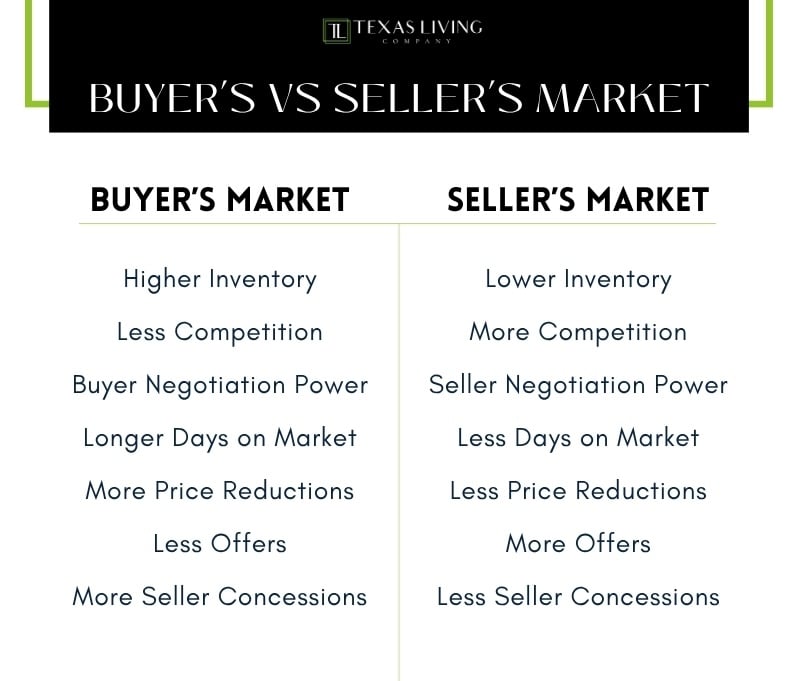
If you’re not sure where to find the current Houston real estate market stats, contact us for the most updated information!
Does the Type of Market Affect Home Prices?
Whether we’re in a buyer’s or seller’s market can affect housing prices, but market conditions aren't the only factor that determines a home's value. Interest rates, local inventory, neighborhood desirability, property condition, and even employment trends can all influence current pricing.
That’s why it's important not to assume that a buyer's market means low prices, or a seller's market means high prices. Real estate markets aren’t one-size-fits-all; trends can vary significantly based on the city, neighborhood, price range, and property type.
The most important thing to remember? There is no “perfect” real estate market! The right time to buy or sell a house depends on your personal goals just as much as the current market conditions.
Thinking about buying or selling a home in Houston? Our team can help you understand the current market, evaluate your options, and develop a strategy based on your unique goals. Contact us to get started today!

Alexis Feezel is a results-oriented Marketing Coordinator responsible for developing, implementing, and overseeing all promotional strategies and activities to effectively market clients & listings and maximize sales.